Top Mechanics Lien Lawyer Tennessee: Protect Your Property Rights
Tennessee mechanics' lien law is one of the most deadline-driven areas of construction law in the Southeast. Whether you are a contractor trying to get paid or a property owner defending against a recorded lien, understanding these rules is not optional-it is the difference between recovering what you are owed and walking away empty-handed.
This guide breaks down how mechanics liens work on Tennessee commercial projects, what prime contractors and remote contractors each need to do, and where the most common (and most costly) mistakes happen.
Key Takeaways
Tennessee mechanics lien laws require strict compliance with filing deadlines. A single missed notice or recording date can completely destroy lien rights, even if the claimant performed every dollar's worth of work on the project. Here is what every contractor, supplier, owner, and design professional working on commercial construction in East Tennessee needs to know before anything else.
Prime contractors and remote contractors follow different rules. Tennessee law differentiates between prime contractors and remote contractors, and the notice, recording, and lawsuit deadlines are not the same for each. Misidentifying your role on a project can lead to using the wrong timeline-and losing your lien.
Missing a deadline is fatal. Whether it is a Notice of Nonpayment, a Notice of Lien, or the window to file a lawsuit, missing a notice or filing deadline can result in losing lien rights permanently. A mechanics' lien prevents property sale until resolved, which makes it a powerful collection tool, but only if preserved correctly.
DZ Law, PLLC represents both sides of mechanics' lien disputes. The firm assists contractors, subcontractors, material suppliers, owners, and developers on commercial lien matters throughout Blount, Knox, Sevier, Loudon, Jefferson, and Cocke Counties.
This article focuses on commercial projects. Different and often stricter rules apply to single-family residential projects and home-improvement work in Tennessee. If your dispute involves a residential job, contact DZ Law for project-specific guidance.
If you are facing a lien deadline or payment standoff right now, call DZ Law at (865) 259-0020 or message the firm online for a mechanics' lien consultation.
How a Tennessee Mechanics' Lien Lawyer Can Help You Right Now
If you searched for "mechanics lien lawyer Tennessee," you probably are not reading for fun. You likely have unpaid invoices piling up, a recording deadline approaching, or a lien sitting on your property that is blocking a sale or refinance. A mechanics lien lawyer helps secure payment for unpaid labor and materials-or, on the owner side, helps clear title and challenge liens that should not be there.
Here are the most common urgent scenarios that bring clients to DZ Law:
Nonpayment on a commercial construction project with no resolution in sight
An approaching 90-day or one-year deadline to record or enforce a lien
A Notice of Completion recorded by the owner that shortens the filing window
A recorded lien clouding title on a planned sale, refinance, or lease transaction
A payment dispute between a general contractor and subcontractors on a multi-party project
DZ Law handles both filing and defending mechanics liens as part of its construction litigation and arbitration practice, including related breach-of-contract and business litigation claims. The firm's attorneys understand that lien disputes rarely exist in isolation-they often sit alongside contract disputes, change-order disagreements, and licensing issues that need coordinated attention.
Do not wait until the last week of a deadline. Call (865) 259-0020 or send a confidential message online for a time-sensitive lien review.
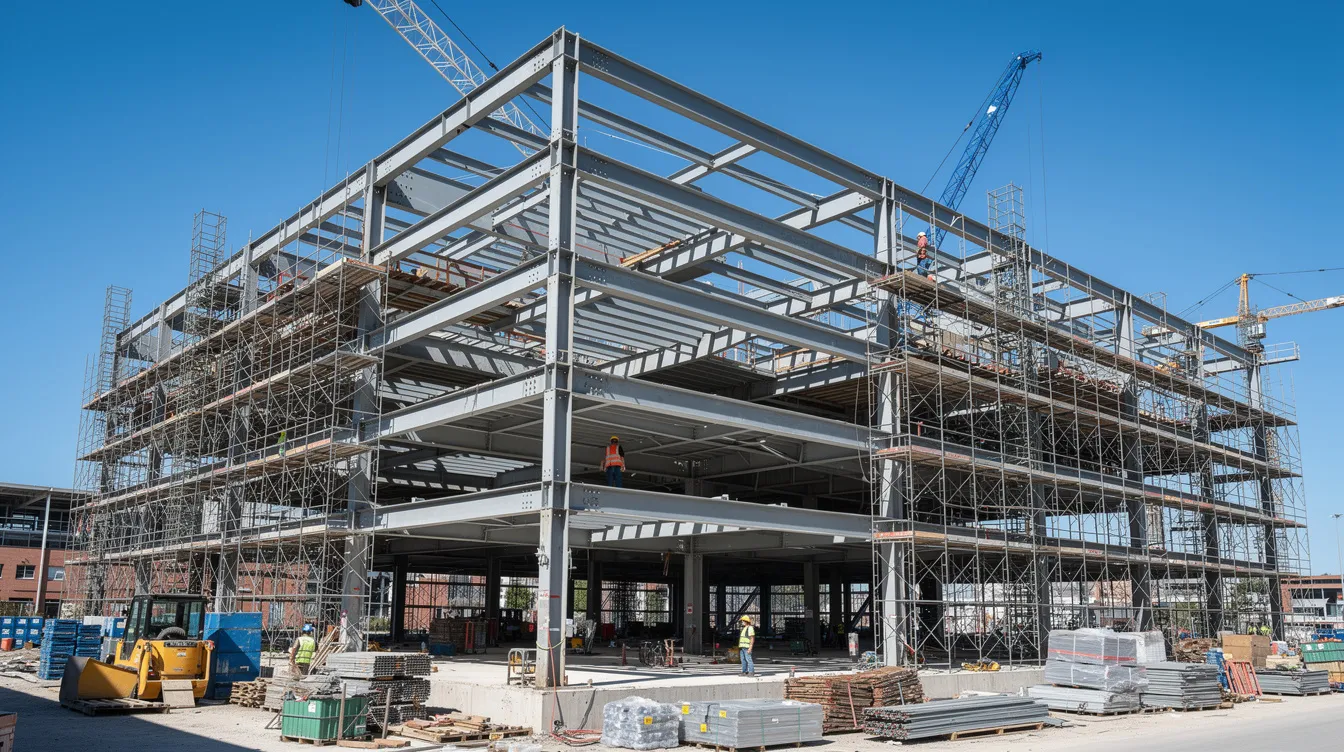
Overview of Mechanics' Liens on Tennessee Commercial Projects
A mechanics' lien is a statutory security interest in real property designed to secure payment for labor, materials, or professional services provided on a construction project. In Tennessee, these construction liens are governed primarily by T.C.A. Title 66, Chapter 11, with additional licensing requirements found in Title 62. A mechanics' lien secures payment for construction work by giving the unpaid party a claim against the improved property itself-not just a personal claim against the party who failed to pay.
This article focuses on commercial projects and larger multi-unit developments: office buildings, retail centers, industrial facilities, hotels, apartment complexes, and similar improvements. These are projects where mechanics liens allowed under Tennessee law give broad rights to multiple tiers of participants. On residential projects-particularly owner-occupied, single-family homes-the rules are significantly more restrictive.
On commercial projects, the lien attaches when visible work begins on the property (excluding preliminary activities like surveying, grading, or excavation). However, lien rights only become enforceable if the claimant follows the specific requirements for notice, recording, and lawsuit filing. Simply performing work and not getting paid is not enough.
Lien rights extend beyond general contractors. On commercial jobs, remote contractors, certain material suppliers, and in some circumstances design professionals such as architects and engineers can preserve lien rights by meeting their respective notice obligations. Tennessee's lien framework also covers materialman's liens for those furnishing materials incorporated into the improvement.
The construction industry in Tennessee has operated under the current statutory framework since a major 2007 revision, which introduced the prime-versus-remote contractor distinction and monthly notice requirements. Courts have enforced these rules strictly ever since.
Prime Contractors vs. Remote Contractors Under Tennessee Lien Law
Tennessee's lien statute draws a sharp line between two categories. A prime contractor (sometimes called a direct contractor) is a person or company with a direct contract with the property owner. A remote contractor is everyone else-subcontractors, sub-subcontractors, and suppliers who contract with the prime contractor or with another remote contractor rather than directly with the owner.
This privity distinction drives nearly every aspect of lien rights. Prime contractors have broader rights and fewer notice obligations. Remote contractors face strict monthly notice requirements and shorter enforcement windows. On residential projects, remote contractors often have no lien rights at all.
Misclassifying yourself is one of the fastest ways to lose a lien. If you believe you are a prime contractor but your contract is actually with a project manager or construction manager rather than the owner, you may be a remote contractor subject to Notice of Nonpayment requirements you have not been following. The reverse is less common but equally dangerous-treating yourself as remote when you have a direct contract with the owner could lead to unnecessary notices that create confusion while missing the steps that actually matter.
DZ Law can help contractors quickly determine their correct status on a particular project and map out the proper lien timeline before any deadlines pass.

Mechanics' Lien Rights for Prime (General) Contractors
If you are a general contractor or construction manager with a direct contract with the owner on a Tennessee commercial project, your lien rights are relatively straightforward-but not automatic.
A prime contractor's mechanics lien generally attaches when visible work begins on the property, covering the full value of labor or materials supplied under the contract. The lien continues for one year after project completion or abandonment, giving direct contractors one year to file a lawsuit to enforce the lien. This is a significantly longer window than remote contractors receive.
While a pre-work notice of lien rights may be recommended as a best practice, failing to provide one typically does not destroy a prime contractor's lien rights on commercial projects. However, prime contractors must file a Notice of Lien within 90 days of project completion or abandonment to preserve priority rights against later-recorded encumbrances.
A prime contractor's lien lasts for one year after project completion, but that clock can be compressed. If an owner files a Notice of Completion under T.C.A. § 66-11-143, prime contractors may face a sharply reduced window-often 30 days on commercial projects-to file a lien claim or risk losing rights entirely. This is an area where counsel can be the difference between keeping and losing a six- or seven-figure claim.
Mechanics' Lien Rights for Remote Contractors and Suppliers
Remote contractors include subcontractors, sub-subcontractors, and certain material suppliers who provide materials or perform work on a construction project without a direct contract with the owner. On Tennessee commercial projects, this group carries the heaviest notice burden.
Remote contractors are not required to send a pre-work preliminary notice, but they must strictly follow Notice of Nonpayment and Notice of Lien deadlines. The most critical obligation: remote contractors must serve a Notice of Nonpayment within 90 days after the end of each calendar month in which they furnished labor or materials that remain unpaid. This notice must go to both the owner and the prime contractor in contractual privity with the remote contractor. Failure to serve a notice of nonpayment within 90 days invalidates the lien for that month's work.
Remote contractors then must record a Notice of Lien within 90 days of project completion or abandonment. Failure at either stage can completely wipe out lien rights. Remote contractors lose lien rights if they fail to serve notice, and there is no grace period or exception for good-faith mistakes.
On residential projects, Tennessee law often denies any lien rights to remote contractors entirely, particularly on owner-occupied single-family homes. If you are a subcontractor or supplier unsure whether your job qualifies as a commercial project for lien purposes, contact DZ Law for project-specific analysis before the first deadline passes.
Design Professionals and Mechanics' Liens in Tennessee
Architects, engineers, and other design professionals who provide pre-construction or construction-phase services on Tennessee commercial projects sometimes overlook their potential lien rights-or assume they have none.
Under Tennessee law, design professionals can hold lien rights where their professional services are directly tied to the improvement of real property. If an architect or engineer contracts directly with the property owner, that person is classified as a prime contractor for lien purposes. If the contract runs through a general contractor or another intermediary, the design professional is a remote contractor subject to all the monthly notice obligations described above.
Practical examples include unpaid architectural design for a new office building, structural engineering for an industrial expansion, or civil design for a retail center site in Knox or Blount County. Because design work often begins well before vertical construction, design professionals frequently face earlier nonpayment issues-sometimes before the lien even attaches to the property through visible construction. This makes early legal advice essential to preserve potential lien rights or identify alternative contract remedies.
Design professionals who are owed money on a Tennessee commercial project should contact DZ Law at (865) 259-0020 or message the firm online to evaluate whether a mechanics lien, arbitration, or business litigation strategy is the best path forward.
Key Tennessee Mechanics' Lien Deadlines on Commercial Projects
Deadlines are the backbone of Tennessee lien law. Here is a high-level roadmap of the critical windows, from beginning work through enforcement:
Lien attachment: The lien attaches when visible construction begins on the project, which affects priority against later-recorded mortgages and other liens.
Monthly Notice of Nonpayment (remote contractors): Must be served within 90 days after the last day of each month in which unpaid labor or materials were furnished. A separate notice is required for each month.
Notice of Lien recording: A Notice of Lien must be filed within 90 days after project completion or abandonment. Liens must be recorded within 90 days of project completion in Tennessee, and a lien is invalid if not filed within 90 days of that trigger date.
Notice of Completion impact: If the owner records a Notice of Completion, remote contractors typically have only 30 days (on commercial projects) to serve their written claim. If not properly served with the Notice of Completion, their rights remain unshortened.
Written notice from subcontractors: Subcontractors must give written notice within 120 days of work completion, and a mechanics' lien must be filed within 180 days after work completion under certain circumstances.
Enforcement lawsuit (remote contractors): Subcontractors have 90 days after filing a lien to initiate a lawsuit. A lien claimant must file a foreclosure action within 90 days of recording the lien.
Enforcement lawsuit (prime contractors): Contractors must commence lawsuits to enforce liens within one year of project completion or abandonment.
Missing any one of these dates is among the most common and most expensive mistakes in Tennessee construction law. DZ Law's construction litigation team routinely helps clients calendar and meet these cutoffs.

Notice of Nonpayment and Preliminary Notice Requirements
Tennessee does not use the same "20-day preliminary notice" system found in states like California. Instead, the statute relies heavily on Notices of Nonpayment for remote contractors on commercial projects.
A Notice of Nonpayment is a written notice sent to both the owner and the prime contractor identifying the claimant, the work or materials provided, the amount unpaid, and the month for which payment is owed. Under T.C.A. § 66-11-145, the notice must include:
The remote contractor's name and address
A general description of the labor, materials, or services furnished
The amount owed as of the notice date
The last date the remote contractor performed or delivered
A property description adequate to identify the real property
A separate Notice of Nonpayment is typically required for each month in which work was performed but not paid. All notices must be sent within 90 days from the last day of each unpaid month. Subcontractors must serve a Notice of Nonpayment to preserve lien rights-this is not optional, and courts enforce the requirement strictly.
A critical pitfall: many subcontractors delay until project completion and try to send one notice covering multiple months. The statute demands timely notice for each month. Missing a single month wipes out lien rights for that month's work.
While prime contractors may give an opening notice of lien rights before work starts, failing to do so usually does not eliminate their lien rights on commercial projects. However, providing such a notice can improve communication and risk allocation with the owner.
DZ Law can draft compliant notices and establish a repeatable process for contractors and suppliers so they do not miss monthly deadlines on longer-term commercial projects.
Recording a Notice of Lien in Tennessee
Once the Notice of Nonpayment obligations are satisfied (for remote contractors), the next step is recording a Notice of Lien against the property. Filing a mechanics lien involves preparing a sworn statement and recording it in the register of deeds office in the county where the property is located-whether that is Blount County, Knox County, Sevier County, or elsewhere in East Tennessee.
A properly prepared Tennessee lien claim should include:
The legal description of the property
The property address
The property owner's name
The prime contractor's name
The claimant's name and address
A description of the work performed or materials provided
The amount of the lien claim
Document errors can affect a lien's validity in Tennessee. Inaccurately describing the property, misspelling the owner's name, or recording in the wrong county can all lead to challenges or outright invalidation of the lien. Courts expect precision, and opposing parties will look for any defect to attack the filing.
DZ Law helps clients gather title information, prepare and record lien documents, and coordinate with any parallel arbitration or litigation strategy to make sure the recording step supports-rather than undermines-the broader case.
Enforcing a Tennessee Mechanics' Lien Through Litigation or Arbitration
Recording a mechanics lien is not the final step. The lien must be enforced through a lawsuit or, in some cases, arbitration within the statutory time period. A lien claimant must file a foreclosure action within 90 days of recording the lien (for remote contractors), or within one year of completion or abandonment (for prime contractors). A mechanics' lien can be enforced through property sale-meaning the court can order the property sold to satisfy the debt if the lien is upheld.
The typical enforcement route is filing a civil action in the appropriate Tennessee circuit or chancery court seeking a foreclosure action on the lien, often combined with breach-of-contract and related business claims. The complaint must identify all parties with an interest in the property, including lenders and other lien holders.
Contractual arbitration clauses can complicate enforcement. Owners and contractors may need to litigate the lien foreclosure in court while arbitrating the underlying payment dispute under the construction contract. DZ Law's construction litigation and arbitration practice is experienced in aligning these parallel processes so that neither path undermines the other.
Waiting until the end of the enforcement window to hire counsel can lead to rushed pleadings and weaker negotiation leverage. Early engagement gives an attorney time to build the strongest case and maximize settlement value.
Mechanics' Liens, Licensing, and the Tennessee Construction Theft Statute
Lien rights in Tennessee are connected to contractor licensing in ways that catch some contractors off guard. Unlicensed contractors cannot foreclose on liens over $500, and on single-family residential projects, an unlicensed contractor's recovery may be limited to documented, out-of-pocket expenses proved by clear and convincing evidence. Even on commercial projects, licensing status can become a weapon in the hands of an opposing party.
The Tennessee construction theft statute (T.C.A. § 39-14-154) adds a criminal dimension. Intentional nonperformance or material deviation from plans with intent to defraud can trigger criminal charges in addition to civil liability. While this statute primarily targets residential repair and remodeling work, its implications ripple into commercial disputes when contractors cross project types.
Contractual disclosures required by the Tennessee Consumer Protection Act and the Home Improvement Act must be handled carefully. Violations can support treble damages and reasonable attorney's fees against the contractor, compounding the financial exposure far beyond the original payment dispute. Attorney fees awarded under these statutes can dramatically increase the cost of a misstep.
DZ Law can review contracts, payment practices, and lien strategy together to minimize both civil and criminal risk on Tennessee projects. This kind of integrated review is especially important for contractors who work on both commercial and residential jobs, where a homeowner's property dispute could trigger licensing consequences that spill over into commercial work.
How Owners, Developers, and Commercial Landlords Can Use Lien Law Strategically
Mechanics' lien law is not only a tool for contractors. Property owners, developers, and commercial landlords managing office, retail, industrial, or multi-family developments in East Tennessee can use the statute strategically to manage risk, accelerate dispute resolution, and protect property value.
One of the most effective owner tools is timely filing a Notice of Completion. Once recorded and properly served, a Notice of Completion shortens the time window for remote contractors to file mechanics liens, accelerating lien resolution and title certainty. This is particularly valuable before a sale or refinance, because a mechanics' lien can prevent property sale until resolved.
Property owners can also issue a Demand for Enforcement, which shortens lawsuit-filing windows. Under certain Tennessee provisions, an owner can force a lien claimant to commence suit within 60 days or forfeit the lien entirely-a powerful negotiation tool when a recorded lien is stalling a transaction.
Common owner strategies include:
Requiring lien waivers with each progress payment
Monitoring whether Notices of Nonpayment have been served by remote contractors
Using joint checks to ensure subcontractors and suppliers are paid directly
Working with counsel to track lien-related deadlines during and after construction
DZ Law also represents commercial landlords in related disputes, including lease defaults and mitigation issues, which often intersect with liens and construction payment conflicts on tenant improvement projects.
Common Mistakes That Destroy Mechanics' Lien Rights
Mechanics liens are powerful but unforgiving. Minor missteps can nullify the lien entirely, converting what should have been a secured claim into an unsecured one-or no claim at all.
Here are the most frequently seen errors:
Missing the Notice of Nonpayment deadline. A remote contractor who fails to send a timely notice for any month in which work was performed but unpaid loses lien rights for that month. There is no cure.
Failing to timely record a Notice of Lien. A lien is invalid if not filed within 90 days of completion or abandonment. This filing deadline is absolute.
Misidentifying the property owner or prime contractor. In the Diaz Construction case, a remote contractor sent its Notice of Nonpayment to the wrong party (a subcontractor rather than the prime contractor in contractual privity) and lost all lien rights as a result.
Overstating the lien amount. Including attorney fees, interest, or charges not tied to the improvement can expose the lien to challenge and undermine credibility.
Filing on the wrong parcel. Contractors sometimes file liens on a parent tract or neighboring lot rather than the specific parcel improved, causing delay and potential liability for a wrongful lien on a customer's property.
Working without a written contract or change-order documentation. While lien rights can sometimes exist without a written agreement, proving the valid lien amount becomes far more difficult without documents to back it up.
Involving a construction litigation lawyer early in the dispute can help avoid these errors and preserve both lien rights and broader breach-of-contract claims. A construction lawyer can prevent critical errors that void lien claims.
Alternatives and Complements to Mechanics' Liens
Mechanics liens are only one legal tool among many to get paid on a Tennessee construction project. Depending on the project type, contract terms, and parties involved, other remedies may be equally or more effective.
Complementary or alternative approaches include:
Breach-of-contract suits based on the written agreement
Account-stated claims for accepted invoices
Unjust enrichment where no contract exists but work was performed
Claims against payment bonds on public or bonded commercial projects (with different deadlines than lien claims)
Arbitration under the construction contract's dispute-resolution clause
Negotiating structured payment plans, partial releases, or joint checks with owners and lenders
A legal claim under any of these theories can supplement or replace a lien, depending on the circumstances. On public projects, payment bond claims often substitute for lien rights entirely, and bond deadlines differ from lien deadlines.
DZ Law's business and commercial litigation and business transactions practices work together to align lien strategy with overall business goals, making sure that pursuing one remedy does not inadvertently weaken another.
Wrongful or Invalid Liens: Options for Property Owners and Lenders
Not every recorded mechanics lien is valid. Some are defective, exaggerated, or filed by parties with no lien rights. Invalid liens can hinder property sales or refinancing, tying up property and creating leverage for claimants who may not deserve it.
Common grounds to challenge an invalid lien include:
Untimely Notice of Nonpayment or Notice of Lien
Work not actually performed on the property
Invoices that have already been paid
Unlicensed contractor issues
Misrepresentation or overstatement of the lien amount
Tennessee owners can petition the court to declare a lien invalid and order a lien release, freeing the property from the cloud on title. Liens remain on property titles until legally removed, so owners who ignore a defective lien risk having it complicate transactions for months or years. In some instances, owners may pursue damages or attorney fees for wrongful or maliciously filed liens.
Lenders and purchasers often require lien resolution before closing, making quick evaluation and challenge of questionable liens critical. If you are a property owner or lender facing a recorded lien on a time-sensitive transaction, contact DZ Law promptly for an assessment of whether the lien can be attacked, bonded around, or negotiated down.
Commercial Project Examples in East Tennessee
To make the law concrete, consider these anonymized examples that resemble disputes commonly handled in Blount County, Knox County, and surrounding areas.
Knoxville Office Renovation - Prime Contractor Preserves Lien Rights
A general contractor completed a substantial office renovation in downtown Knoxville. After a change-order payment dispute left more than $200,000 unpaid, the contractor worked with counsel to timely record a Notice of Lien within 90 days of project completion. Because the contractor had a direct contract with the owner, the lien continued for one year-long enough to negotiate a favorable settlement without rushing into litigation. The lien served as leverage because the owner needed clear title for a refinance.
Sevier County Hospitality Project - Remote Contractor Loses Lien Rights
A mechanical subcontractor provided HVAC installation on a large hotel project in Sevier County over a six-month period. The sub did not send monthly Notices of Nonpayment, assuming it could send a single notice after completion. By the time counsel was retained, the 90-day window had closed for four of the six months of unpaid work. The subcontractor preserved lien rights for only two months of services-a fraction of the total owed-because the notice obligations had not been met.
Blount County Commercial Property - Owner Uses Notice of Completion
A developer completed a retail center and recorded a Notice of Completion, triggering a 30-day window for remote contractors to respond. Two subcontractors with overstated liens failed to file within the compressed deadline. The developer then served a Demand for Enforcement on a third potential lien claimant, forcing that party to file suit within 60 days or forfeit its lien. The developer cleared title and closed on refinancing within 90 days.
These scenarios reinforce the value of early legal advice and a coordinated litigation or arbitration strategy for lien-related conflicts.
How Mechanics' Liens Intersect With Business & Commercial Litigation
A mechanics lien is often only one piece of a larger commercial dispute. The same project that produces a lien filing may also involve defective work claims, delay and acceleration disputes, change-order disagreements, and termination issues. Treating the lien as an isolated problem ignores the broader picture.
Lien foreclosure actions often travel together with breach-of-contract, misrepresentation, or Tennessee Consumer Protection Act claims between owners, general contractors, and subcontractors. Multiple claims against the same parties require careful coordination to avoid inconsistent positions or missed deadlines.
DZ Law's business and commercial litigation group handles complex multi-party cases involving lenders, sureties, property managers, and corporate affiliates-not just construction trades. Strategic decisions about whether to file a lien, sue on the contract, demand arbitration, or pursue settlement should be made with an eye toward the client's long-term business relationships and reputation in the construction industry.
Business owners and contractors facing multi-issue disputes should call (865) 259-0020 or contact DZ Law online to discuss a coordinated litigation plan.
Mechanics' Liens, Construction Site Injuries, and Insurance Issues
Payment disputes and site injuries often arise on the same project, creating overlapping legal and insurance issues that require coordinated attention.
While mechanics liens secure payment for work performed, site-injury and premises liability claims involve bodily injury, OSHA investigations, and insurance coverage analysis. DZ Law's premises liability and personal-injury experience allows the firm to help contractors and owners coordinate responses when an injured worker's claim intersects with unpaid invoices and stalled projects.
Payment holdbacks related to injury disputes can sometimes fuel lien filings. An owner who withholds payment pending resolution of an injury claim may inadvertently trigger a cascade of lien notices from subcontractors and suppliers who were not at fault. Careful contract drafting and risk allocation up front may reduce this risk on future projects.
Preventing Mechanics' Lien Disputes With Better Contracts
The best mechanics lien dispute is the one that never arises. Strong contracts are the first line of defense against payment fights that escalate into recorded liens, lawsuits, and stalled projects.
Contract terms that reduce lien conflict include:
Clear scope of work with specific deliverables and exclusions
Detailed payment schedules tied to milestones or monthly billing
Documented change-order procedures requiring written approval before extra work begins
Dispute-resolution clauses specifying mediation, arbitration, or litigation preferences
Lien-waiver procedures tied to each progress payment
Tennessee-specific provisions must also be addressed. Contracts on certain projects must comply with home improvement and consumer protection statutes, and failure to include required disclosures can expose contractors to treble damages and other penalties.
DZ Law's business transactions and contracts practice can draft or review construction, subcontract, and design agreements for owners, contractors, and design professionals to minimize future lien fights. Schedule a contract review by calling (865) 259-0020 or using the firm's online contact form.
Why Work With DZ Law, PLLC on Tennessee Mechanics' Lien Matters
DZ Law, PLLC is a Blount County-based civil litigation firm representing commercial clients throughout East Tennessee, including Knox, Sevier, Loudon, Jefferson, and Cocke Counties. The firm's focused construction litigation and arbitration practice includes experience with mechanics liens and lien defense, familiarity with Tennessee construction statutes, and regular appearances in local circuit and chancery courts.
A construction lawyer can prevent critical errors that void lien claims-and DZ Law's integrated practice means the firm can handle related issues without referring clients elsewhere. Beyond construction disputes, the firm also handles business and commercial litigation, premises liability, medical malpractice, appeals and federal court litigation, and business transactions, allowing for comprehensive representation when disputes cross practice areas.
What sets DZ Law apart in lien matters:
Clear communication about deadlines and risk, so clients always know where they stand
Practical advice tailored to the client's business objectives, not just legal theory
Willingness to try cases when settlement is not in the client's interest
Experience coordinating lien enforcement with arbitration and broader contract disputes
If you have a mechanics lien question on a Tennessee commercial project, call (865) 259-0020 or reach out online to start the conversation.
What to Expect in an Initial Mechanics' Lien Consultation
Contacting a law firm about a lien problem can feel uncertain, especially when deadlines are tight. Here is what to expect when you reach DZ Law regarding a Tennessee mechanics' lien issue.
The firm will typically request the following information upfront:
Project location and type (commercial, mixed-use, residential)
Your role on the project (owner, prime contractor, remote contractor, supplier, design professional)
Key contract documents, including the original agreement and any change orders
Invoices, pay applications, and payment records
Any notices already sent or received (Notices of Nonpayment, Notices of Completion, demand letters)
The initial focus is usually on two questions: what lien rights or defenses currently exist, and what deadlines are approaching in the next 30 to 60 days. From there, the attorney will discuss potential strategies-lien filing or removal, negotiation, arbitration, or litigation-and how each aligns with your business or property goals.
To get the most out of the consultation, gather your contracts, change orders, pay applications, and any correspondence before calling. The more complete your documents, the more precise the advice.
Contact DZ Law, PLLC About a Tennessee Mechanics' Lien Problem
Whether you are a contractor who needs to file a lien to get paid, a subcontractor watching a deadline approach, or a property owner dealing with a recorded lien that is blocking a transaction, DZ Law is ready to help.
The firm handles commercial construction projects and lien disputes in Blount, Knox, Sevier, Loudon, Jefferson, and Cocke Counties and throughout East Tennessee. Early legal advice can preserve lien rights, protect property, and avoid costly mistakes in Tennessee's complex construction law environment.
Call (865) 259-0020 to speak with DZ Law about your mechanics' lien or construction dispute.
Or message DZ Law through the firm's online contact form to schedule a consultation today.

Frequently Asked Questions About Tennessee Mechanics' Liens
The following questions address common, practical issues not fully covered in the main body of this article, tailored to Tennessee commercial projects.
Can I still record a mechanics' lien in Tennessee if I do not have a written contract?
While a written contract is strongly preferred and makes lien enforcement significantly easier, mechanics lien rights can sometimes exist based on oral agreements and the actual work performed, depending on the facts. Tennessee courts look at whether the claimant can prove the scope of work, price, and unpaid balance.
Without a written agreement, detailed invoices, emails, text messages, and project records become critical evidence. The claimant bears a heavier burden to show that work was authorized, completed, and unpaid. Anyone in this situation should consult with DZ Law promptly to evaluate whether a lien is still feasible and what supporting documentation will be required.
What happens if I overstate the amount of my Tennessee mechanics' lien?
Honest mistakes in calculating the lien amount sometimes can be corrected, but intentionally inflating a lien can undermine credibility and expose the claimant to potential counterclaims or sanctions. Tennessee courts may view a significantly overstated lien as invalid or abusive, especially if it appears to be used as leverage rather than a good-faith estimate of what is owed.
Contractors should work with counsel to carefully calculate and document lien amounts before recording, particularly on large or change-order-heavy projects. Including items that are not lienable-such as attorney fees not authorized by statute, interest, or service charges-can give the opposing party grounds to challenge the entire lien.
Can a mechanics' lien stop the sale or refinancing of my commercial property?
Yes. A mechanics' lien can prevent property sale until paid, and homeowners cannot refinance with an active mechanics' lien clouding title. Most lenders and title companies will not close on a transaction with an unresolved lien on the property.
Common solutions include negotiating a partial payment and a lien release, escrowing disputed funds at closing, or filing a court action to challenge an invalid lien. Invalid liens can hinder property sales or refinancing just as effectively as valid ones, because title companies treat any recorded lien as a cloud until it is formally resolved. Owners facing a time-sensitive sale or refinance should contact an attorney quickly to assess their options and avoid losing the deal.
Are remote contractors ever allowed lien rights on Tennessee residential projects?
Tennessee law is particularly restrictive for remote contractors on certain residential projects. In many cases, remote contractors have no mechanics lien rights on owner-occupied, single-family homes. The statute was designed to protect homeowners from liens filed by parties they never hired and may never have known were on the project.
However, the classification of the project-commercial versus residential-and the nature of the structure can be nuanced. A four-unit apartment building, for example, may be treated differently than a single-family home. Assumptions are risky, and subcontractors and suppliers should seek legal advice early to determine whether the specific job qualifies as a commercial project for lien purposes.
Does hiring a Tennessee construction arbitration lawyer affect my right to file a lien?
Pursuing arbitration under a construction contract does not automatically take away mechanics lien rights, but lien deadlines continue to run while arbitration is pending. This is one of the most dangerous traps in construction law: a party assumes that beginning arbitration pauses the lien clock, only to discover months later that the window to record a lien or file an enforcement suit has closed.
Experienced construction counsel can coordinate both processes-preserving and enforcing the lien in court while arbitrating the underlying payment dispute as required by the contract. If you are considering arbitration on a Tennessee construction project, consult with DZ Law to make sure no lien or enforcement deadlines are missed while you pursue alternative dispute resolution.